What does figure skate sharpening mean?
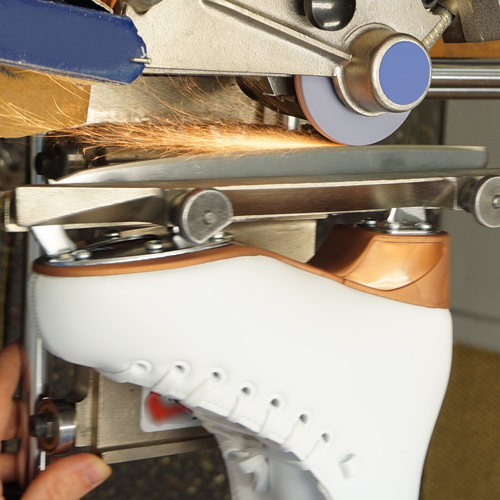
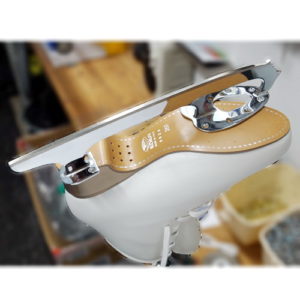
In figure skate sharpening, a hollow groove (called a hollow) is ground into the bottom of the blade, creating two sharp edges (the inside and outside edges). These edges make it possible to:
- have good grip in turns while skating
perform controlled stops
execute precise movements (e.g. spins, jumps, and turns)
As the blade wears over time, the hollow becomes “flatter” → the skate gradually starts to slip and lose grip.
How is the sharpening done?
The blade is ground using a figure skating sharpening stone and machine evenly along its entire length
Finally, it is checked that:
both edges are completely symmetrical and sharp
Figure skate sharpening is more precise than hockey skate sharpening → that’s why it’s recommended to use a specialized shop.
Hollow depth
The hollow depth affects how the skate feels:
Deep hollow → more grip, less glide
Shallow hollow → more glide, less grip
In figure skates, the hollow depth range is typically around 9–16 (the unit depends on ice hardness, the skater, learned technique, and skill level). Ask about hollow depth when bringing your skates in for service.
How often should you sharpen your blades?
Beginner: about 1–2 times per year
Active recreational skater: 3–6 times per year
Competitive skater: monthly
The need for sharpening becomes noticeable when:
turns do not hold
stops start to slip
balance feels uncertain
skating begins to feel more physically demanding
Common sharpening mistakes
❌ Uneven edges → the skate feels like it “pulls” underneath
❌ Sharpening too infrequently → slows down technical development
❌ Using hockey skate or automatic machines → the blade shape may become flattened prematurely
Summary
Sharpening creates two sharp edges on the blade
The correct hollow depth is found through cooperation
Regular sharpening improves progress and safety